
How Autonomous Lifting Robots Move Heavy Loads in Modern Factories
From Floor Chaos to Flow: A Technical Look at What Changes
Throughput is a math problem wrapped in motion. A lifting robot enters that equation and reshapes the constraints on day one. In many plants, aisles are narrow, orders spike, and labor shifts create uneven load patterns—so the system staggers. With lift robotics, the unit of work is no longer a person plus a pallet jack; it is a mobile platform orchestrated by software, edge computing nodes, and safety layers that scale across lines. Data says up to 30% of travel in manual moves is dead time due to staging, waiting, or re-routes; another 10–15% disappears in handoffs. If cycle time is king, wasted motion is the silent tax. So we track takt-time drift, dwell at pick/put, and the queue length at docks. Then we ask a blunt question: what if we plan motion the way we plan material flow?
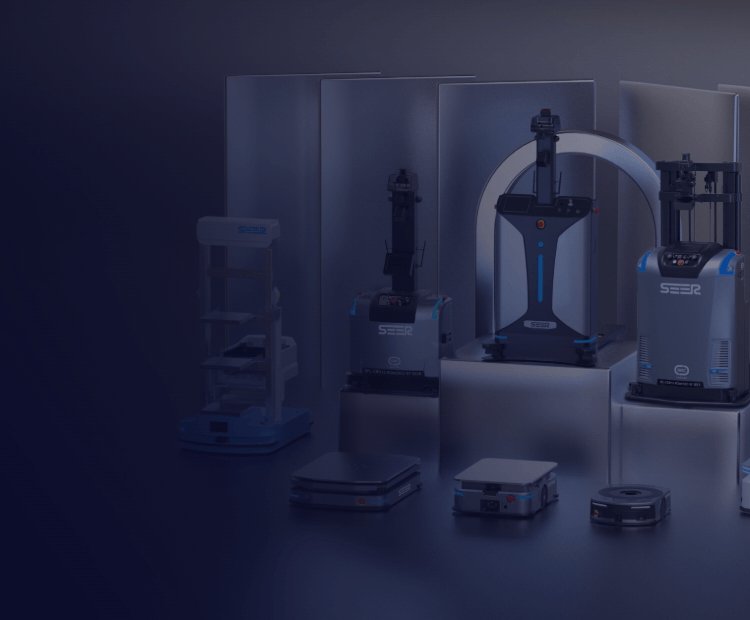
Here is the twist (and it is not just hype): when the robot’s navigation and lift act as one system, the floor behaves like a coordinated mesh, not a line of one-off runs. LiDAR mapping, force-torque sensing, and better power converters turn pathing into a predictable service, not a gamble. That is the scenario. The data shows room to recapture minutes every hour, shifts every quarter. The question is simple: how do we make those minutes stick without adding new friction? Next, we press into the quiet failures that keep gains from compounding.
The Hidden Pain Points Operators Still Feel
What keeps breaking?
Even after pilots look good, small cracks appear in week three—funny how that works, right? With lift robotics, the theme is not “can it lift?” but “can it lift the way the work actually happens?” Traditional flows assume clean pallets, square loads, perfect stickers, and open staging. Real floors have torn shrink, skewed forks, and tight corners. Operators feel it when pallet detection fails on glossy wrap, when forks nudge a fragile base, or when SLAM drifts near racking that looks identical row to row. Look, it’s simpler than you think: the pain is misalignment between control logic and messy reality. The result is micro-stops, manual assists, and rising exception tickets.
Another quiet pain: handoff friction. Warehouse control systems signal one thing, the AMR fleet manager another. Without crisp APIs and a shared job model, queues wobble. Edge alerts flood the channel, and a supervisor plays traffic cop. Payload stability suffers when acceleration profiles ignore odd center-of-mass. Battery swaps happen at the wrong time, pushing a robot off the floor during peak waves. And maintenance? If parts commonality is low, spares management adds cost, fast. These are not headline failures; they are small leaks that drain ROI over months. Fixing them means tighter perception stacks, safer lift kinematics, and near-real-time orchestration that fits the plant’s rhythms, not the other way around.
New Technology Principles, Real Gains
What’s Next
Closing those gaps comes down to principles, not promises. First, perception must fuse LiDAR odometry with camera depth for robust pallet edge detection under glare and wrap. That reduces miss-grabs and cuts manual assists. Second, lift control should be model-based, with force-torque feedback that adapts fork height as the pallet flexes—so you protect fragile bases without crawling. Third, fleet orchestration needs to be demand-aware. It should read dock queues, WMS priorities, and charger status, then re-rank jobs on the fly. These sound technical because they are, yet they show up as smoother moves and fewer stops. When lift robotics aligns navigation, lift, and jobs in one loop, the plant’s rhythm tightens. Fewer deadheads. Cleaner merges. Less guesswork.

Now compare old versus next: manual plus tuggers relies on tribal knowledge and wide buffers. It looks flexible but burns time in every corner case. Modern systems use edge computing nodes to cache maps, share traffic intent, and plan around people—in real time, with safety PLCs in the loop. Power converters extend uptime by enabling smarter charge windows, not just bigger batteries. And the future? Higher autonomy tiers that self-verify picks, learn aisle friction, and tune acceleration to payload type. The summary is simple, but the impact is big: fewer interventions, tighter cycle time, and measurable predictability—because predictability is what scales.
Advisory close: If you are choosing a solution, measure three things. One, sustained uptime under mixed loads and narrow-aisle turns (not demo-day routes). Two, dock-to-dock cycle time during peak waves, including exception handling and re-routes. Three, safety function coverage and diagnostic depth—think PLd/SIL2 chains, E-stop response, and safe speed envelopes. If a vendor brings traceable data on all three, you can forecast payback with less risk and set clean SLAs. For a deeper look at platforms that follow these principles without the noise, see SEER Robotics.
